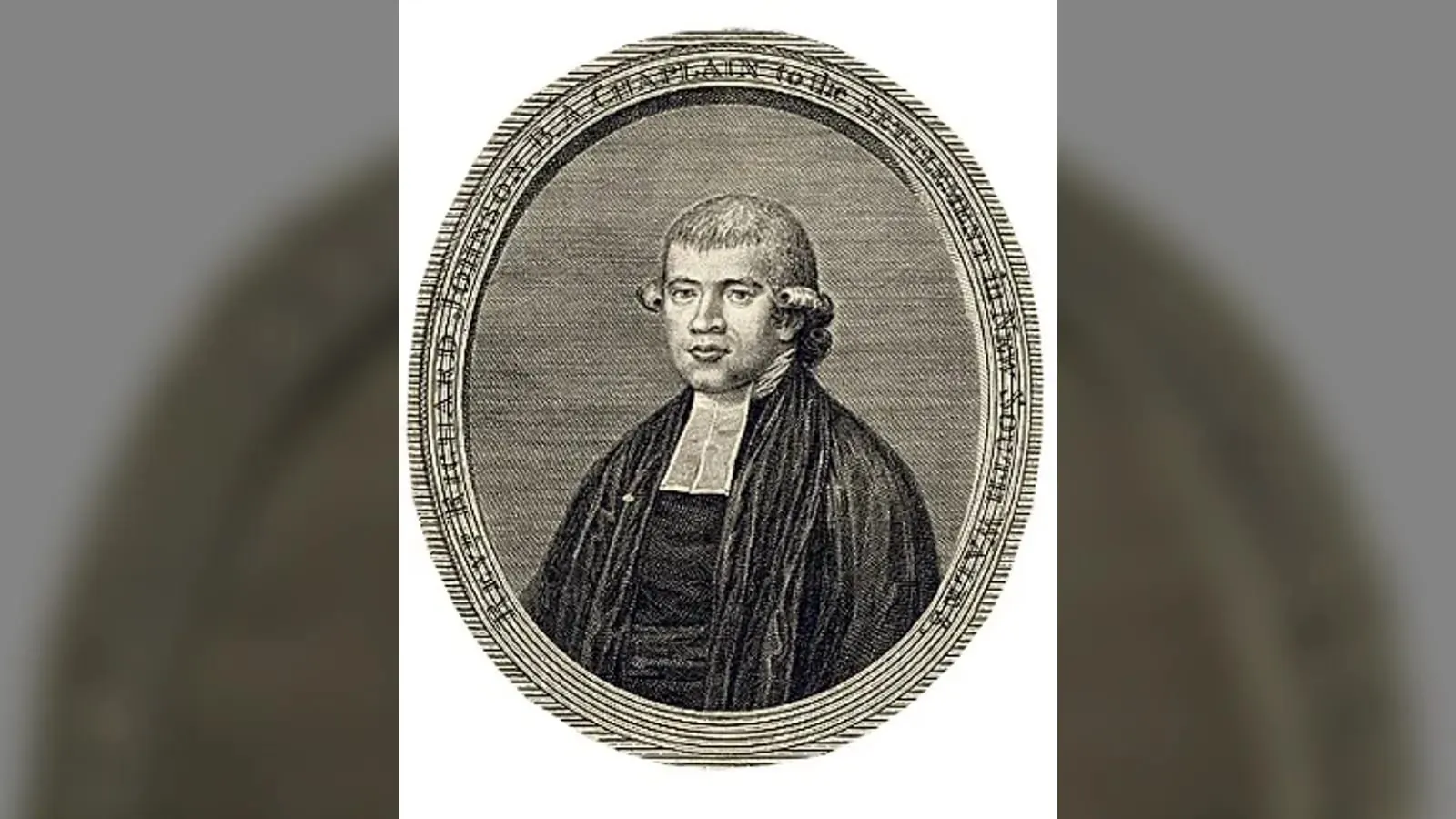
Reverend Richard Johnson
Australia's First Preacher
It is my duty to preach to all, to pray for all and to admonish everyone.
Among the first fleet of 736 convicts in 1788, God sent a “prisoner of Jesus Christ” — Reverend Richard Johnson. He was commissioned as a clergyman of the Church of England by King George III on 24 October 1786, and it was through the influence of John Newton and William Wilberforce that he was selected as chaplain for the new colony of New South Wales.
Johnson served the colony for twelve years, from 1788 until 1800. His first sermon preached in Australia was on the 3 February 1788 from Psalm 116:12 — “What shall I render unto the Lord for all his benefits to me?” Regrettably we do not have a record of what he said. In fact, none of his spoken sermons have survived.
On the 25th of January 1788 the first fleet sailed into Port Jackson. On Saturday 26th January, early in the morning, Arthur Phillip along with a few dozen marines, officers and oarsmen rowed ashore and took possession of the land in the name of King George III.
At 10am on Sunday 3rd February 1788, Richard Johnson, Naval Chaplain, conducted a Christian service. This was the first Christian service held on Australian soil. The Governor ordered all to be present, and there were over 1,000 people in attendance. The service took place in the open air under a tree — many believe it was in the area where St James’ Church on Macquarie Street stands today.
The personal life of Australia’s first preacher
- He was from Yorkshire, England, as was Captain James Cook.
- He studied at Cambridge University from 1780, and was ordained in 1783.
- He came to Australia with his wife Mary, who because of her zeal for the Lord was referred to by her husband as being half-Baptist and half-Methodist. Mary was a constant support and encouragement to him throughout his life and ministry.
- The Johnsons were the product of the Wesleyan revivals of that time (1700s).
- They were not long married (4 December 1786) before leaving for Australia on 13 May 1787.
- Their first home was a hut made from cabbage tree palms; they eventually moved into a brick home built for the family in 1791 on Bridge Street in the city.
- Their first child was stillborn in October 1788. Two years later, in 1790, they had a daughter called Milbah (an Indigenous name), and in 1792 a son named Henry.
- The Johnsons loved the Indigenous people and did all they could to reach them with the gospel and minister to them, adopting two young Indigenous girls — one named Abaroo — who lived with them.
- In November 1788 he began ministering in the settlement at Parramatta, first monthly and then fortnightly. It took him up to four hours each way by rowboat up the Parramatta River, enduring the possibility of being speared by the natives who lived along its banks.
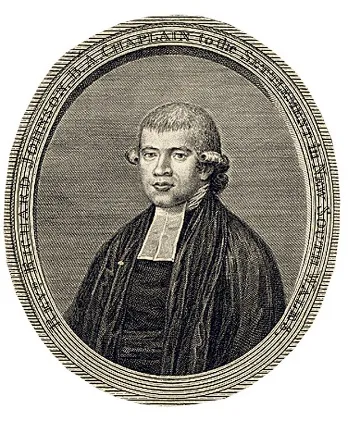
For twelve years Richard Johnson worked and ministered in the colony. He engaged in regular ministrations in Sydney, Toongabbie and Parramatta, as well as making a visit to Norfolk Island. At one point his biographer noted that there had been 226 baptisms, 220 marriages and 854 burials. Johnson also took part in short exploring expeditions, was a successful market gardener, and founded the first school in the nation.
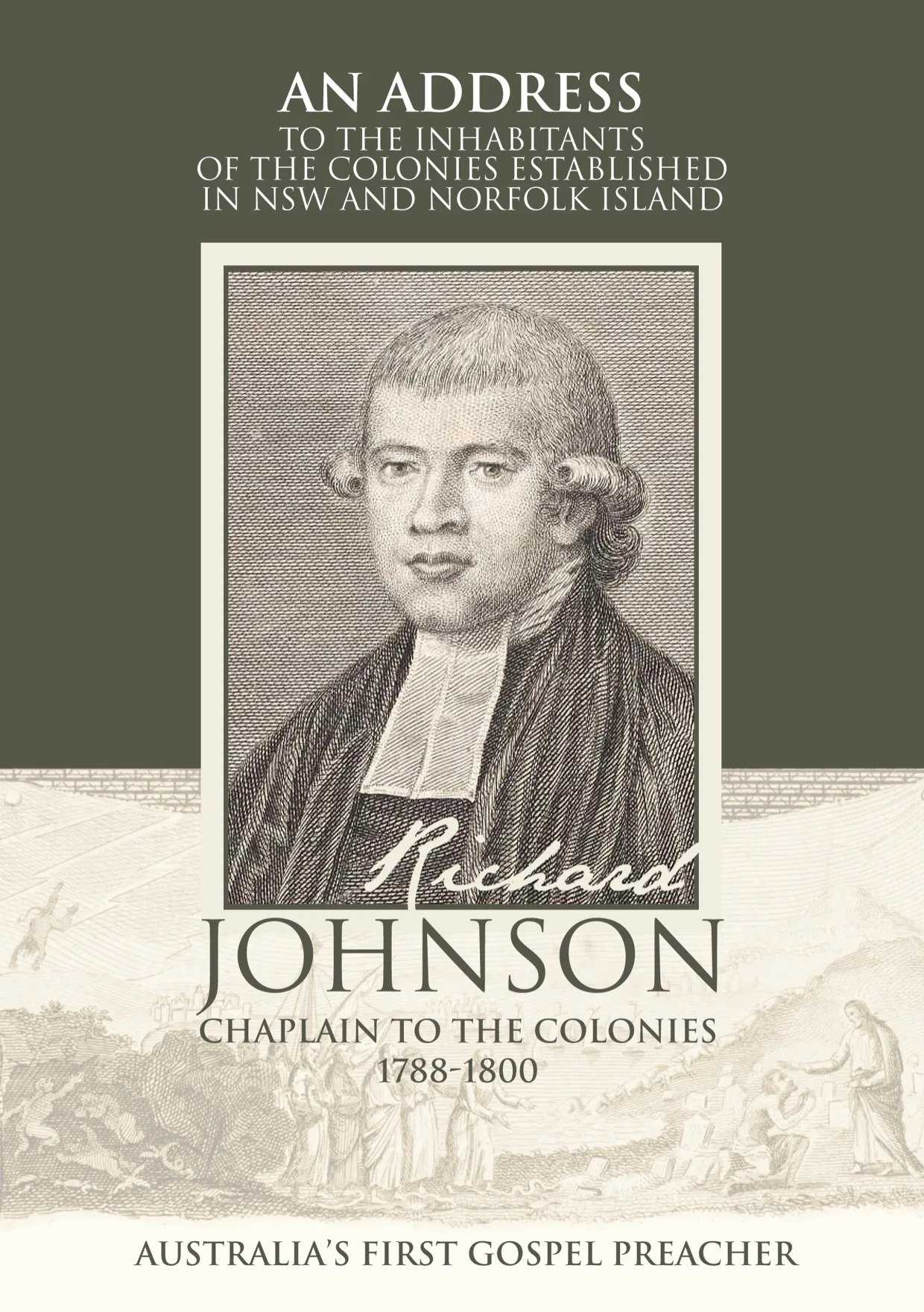
He was a compassionate and devout servant of Jesus Christ to all in the colony, loved and respected by many of the convicts and Aboriginals to whom he ministered. In 1792 he wrote an extended gospel tract for distribution. The number of settlers and the sprawling nature of the community made it impossible for him to personally minister to everyone, so he wrote a message that could be read by all.
The Richard Johnson Monument, located at the intersection of Hunter, Bligh and Castlereagh Streets in the Sydney CBD, marks the site of the first Christian church built in Australia. The building was also used as a Christian school — the first school in Australia, which was Christian. The Johnsons were concerned for the education of all children, whether belonging to convicts or freemen, and Johnson set up schools in Sydney, Parramatta and on Norfolk Island. By the time the city building burnt down, the school had reached 150 students.
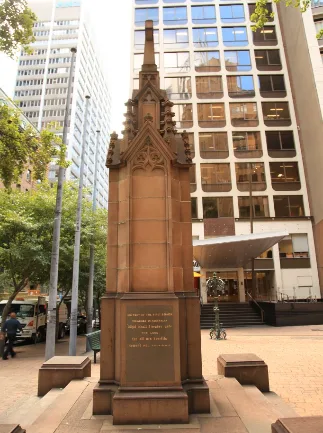
The first church building
- Completed in just eight weeks, with Johnson paying for the materials and labour to build it.
- The first service in the building was on 25 August 1793. Unfortunately it was burnt down on 1 October 1798, having been made of primitive materials.
- It was a T-shaped building that could hold up to 500 people, so the three sections could seat convicts, settlers and officials such as soldiers separately.
After the destruction of the church, the second Governor, John Hunter, laid the foundation for a new building in 1798. It was named St Philip’s Church after the first Governor and completed in 1810, in the area of ‘Lang Park’ (Wynyard today). The third and current St Philip’s Church on York Street was built in 1856.
The Richard Johnson Bible
Otherwise known as the “First Fleet Bible,” St Philip’s Church is the privileged custodian of this copy of God’s Word that landed in Australia in January 1788.
- Johnson’s Bible is one of our greatest Australian treasures linking us to our Christian heritage.
- William Cowper, the first full-time minister of St Philip’s Church, returned to England in 1842 for medical treatment and, while there, had the Bible rebound as we have it today.
- People such as Queen Elizabeth II and King Charles have signed the Bible.
- It is possible to view the Bible upon request.
An interesting fact
Richard Johnson was a successful farmer in his own right. While in Rio de Janeiro, Brazil (on his way to Australia), he was given orange seeds. He planted them in the front yard of his property on Bridge Street and was so successful in growing oranges that he established an orchard at Kissing Point, Parramatta — becoming the pioneer of the Australian citrus fruit industry. More than that, Richard Johnson introduced the seed of the gospel to Australia. Even though he saw little result, he was instrumental in breaking up the fallow ground and planting the seed of the gospel in the souls of as many people as he could reach.
Being born again, not of corruptible seed, but of incorruptible, by the word of God, which liveth and abideth for ever.
1 Peter 1:23
Conclusion
Upon his return to England in 1800, Richard Johnson continued to serve the Lord in London until illness overtook him. His last words before his death were “Christ is precious,” and to his wife — who survived him by almost four years — he said, “God bless you.” Richard Johnson, Australia’s first gospel preacher, was promoted to glory on 3 March 1827, at the age of 74.
Some key verses that sum up his life: Genesis 12:1; Proverbs 1:32; 2 Timothy 2:3–4; Psalm 126:5–6; 2 Corinthians 4:16–18.
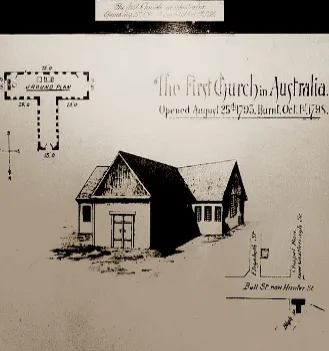
Built at Johnson's own expense and completed in just eight weeks, the first church opened on 25 August 1793. The T-shaped building could hold up to 500 people before it was burnt down on 1 October 1798.
Timeline of Life
- 1753Born in Yorkshire, England
- 1786Commissioned chaplain to New South Wales by King George III
- 1787Departs England with the First Fleet
- 1788Preaches the first Christian sermon on Australian soil, 3 February
- 1793Opens the first church in Australia, 25 August
- 1800Returns to England
- 1827Dies in London, aged 74
More Profiles
View All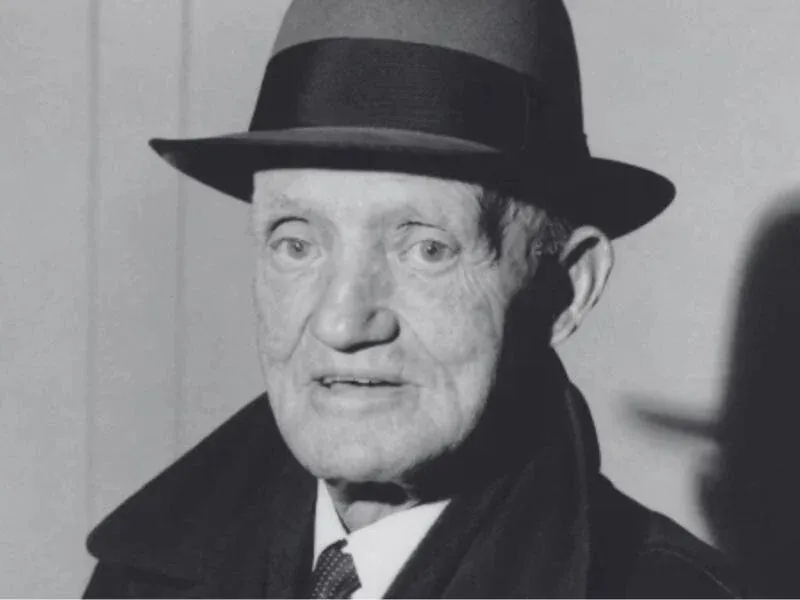
Arthur Malcolm Stace
1885–1967
Once a destitute alcoholic and petty criminal, Arthur Stace was transformed by the gospel and spent 35 years writing one word — 'Eternity' — across the pavements of Sydney, an estimated half a million times.
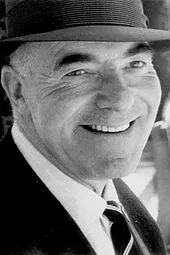
Frank Arthur Jenner
1903–1977
For 28 years, Frank Jenner walked the streets of Sydney asking strangers one question — and the ripples of his faithful witness spread across Australia, England, India, and beyond.
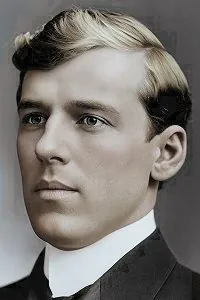
Robert Harkness
1880–1961
A reluctant young pianist from Bendigo, converted under the Torrey–Alexander mission of 1902, who went on to travel the world with the great evangelists and to compose more than 2,500 gospel hymns.