Arthur Malcolm Stace
Mr Eternity
I felt a powerful call from the Lord to write 'Eternity'. I had a piece of chalk in my pocket, and I bent down right there and wrote it. I've been writing it at least 50 times a day ever since.
Arthur Malcolm Stace was born on 9 February 1885 at Redfern, Sydney, the fifth child of William Wood Stace, a labourer from Mauritius, and his native-born wife Laura. Raised in poverty, Stace later claimed that he became a ward of the state when aged 12, worked for two years in a south-coast coal-mine, was gaoled for drunkenness, lost a succession of jobs and turned to thieving. His two sisters were prostitutes and his two brothers died derelict drunkards.
Having served as a private with the 19th Battalion in France as a drummer and stretcher-bearer during World War I, he returned to Australia in February 1919 and was discharged medically unfit. Falling back into old ways, drunk, broke and out of work, in August 1930 Stace was inspired by a preacher at Pyrmont to give up the grog. He was converted through the ministry of St Barnabas Anglican Church, Broadway, on 6 August 1930 and began a new life.
He helped down-and-out men at R.B.S. Hammond’s hostel, led open-air meetings in the city, and visited the Francis Street Methodist hostel, Callan Park mental hospital and the Lazaret.
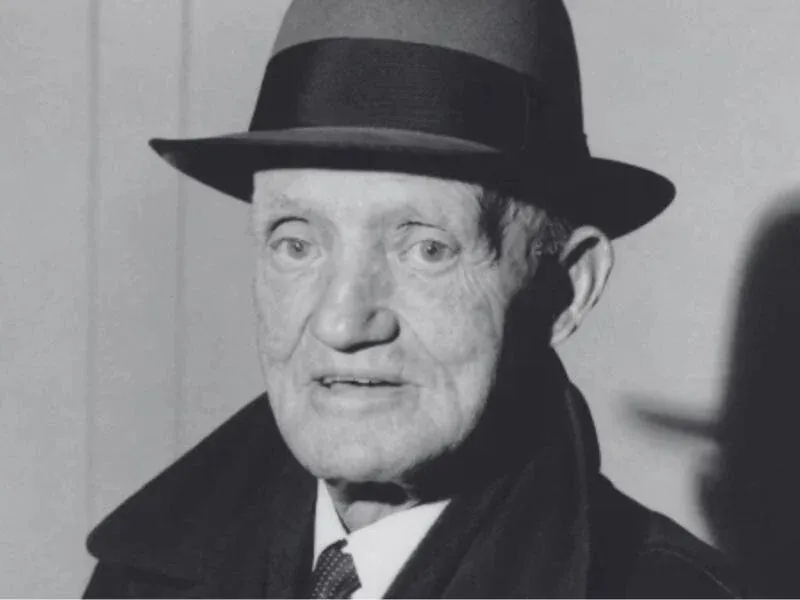
The call to write “Eternity”
In the 1930s, Stace heard the evangelist John Ridley tell a congregation in Burton Street Baptist Tabernacle that he wished he could “shout eternity through the streets of Sydney.” Stace was inspired. He had never learnt to read or write — yet under the ministry of John Ridley in November 1932, God gave him the ability to write one word in copperplate hand.
“I felt a powerful call from the Lord to write ‘Eternity’. I had a piece of chalk in my pocket, and I bent down right there and wrote it. I’ve been writing it at least 50 times a day ever since.”
A “birdlike little man with wispy white hair,” Stace became known as “the Eternity Man,” one of the most beloved characters of Sydney. He tried writing “Obey God” for a while, but concluded: “It wasn’t as good. Eternity makes ‘em think.”
His cryptic message in yellow, waterproof chalk — written in a distinctive copperplate hand — was inscribed on pavements from Martin Place to Parramatta, though he preferred the invitingly dark surface of the pavements at King’s Cross. It cost him “six bob a day in chalk” when he was “running hot.” His one-word message could weather three to six months; one in Surry Hills, he was told, lasted twelve.

Legacy
On 22 January 1942 Stace married Ellen Esther (“Pearl”) Dawson at St Barnabas Anglican Church, Sydney, describing himself as a “missioner.” Pearl died in 1961, and in 1965 Stace moved from Pyrmont into the Hammondville homes. He died there on 30 July 1967, having bequeathed his body to the University of Sydney medical school and his savings to Baptist missions.
In 1977, a brass inscription was unveiled in a paving stone near the Sydney Square waterfall. In the familiar copperplate hand, it reads: Eternity.
Over 35 years, it is estimated that Arthur Stace wrote the word “Eternity” some 500,000 times across the streets of Sydney, into country towns of NSW and Victoria. He was a man who believed in the power of God’s Word — Romans 10:17. One simple act of obedience to God’s calling can have a far greater impact on souls than we might think.
The first church of Sydney, built in 1793, stands as a testament to Johnson's unwavering faith and personal sacrifice.
Timeline of Life
- 1885Born at Redfern, Sydney, 9 February
- 1916Enlists in the Australian Imperial Force
- 1930Converted at St Barnabas Anglican Church, Broadway, 6 August
- 1932Inspired to write 'Eternity' by evangelist John Ridley, November
- 1942Marries Ellen Esther ('Pearl') Dawson
- 1967Dies at Hammondville, 30 July, aged 82
More Profiles
View All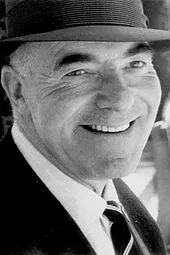
Frank Arthur Jenner
1903–1977
For 28 years, Frank Jenner walked the streets of Sydney asking strangers one question — and the ripples of his faithful witness spread across Australia, England, India, and beyond.
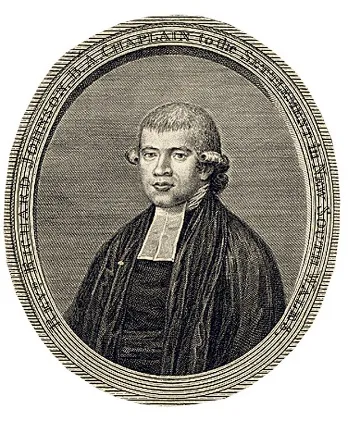
Reverend Richard Johnson
1753–1827
Chaplain to the First Fleet and Australia's first preacher of the gospel, Richard Johnson served the colony of New South Wales for twelve years from 1788.
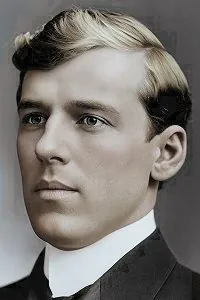
Robert Harkness
1880–1961
A reluctant young pianist from Bendigo, converted under the Torrey–Alexander mission of 1902, who went on to travel the world with the great evangelists and to compose more than 2,500 gospel hymns.