Our Christian Prime Ministers
From Federation to the present day, the faith and Christian heritage of the men and women who have led Australia.
Written By
Editorial Team
“Obey them that have the rule over you, and submit yourselves.”
Hebrews 13:17
Australia’s Prime Ministers have all come from a background of what we would term “mainstream religion” — Anglicanism, Catholicism, and the denominations that make up what is now the Uniting Church. Like our first settlers and explorers, the majority of our leaders have lived their lives, and sought to rule this nation, based on the Christian principles they were taught in God-fearing homes. For decades, Bible-based principles have formed the basis of the way our country is governed.
Their beliefs
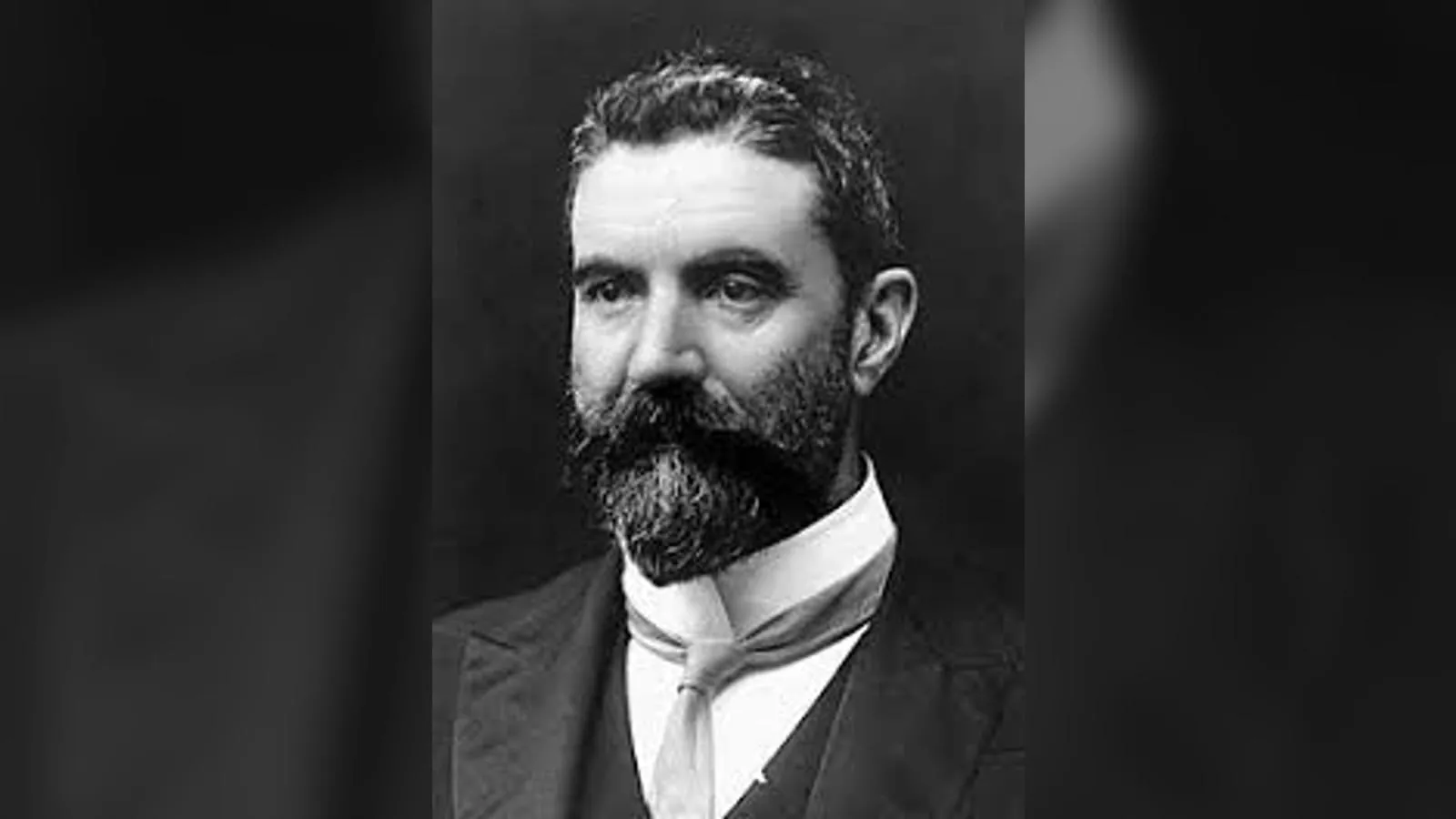
Australia’s Prime Ministers have all been Christian or of Christian background, though for some their beliefs were later rejected. Alfred Deakin, our second Prime Minister, was a deeply religious Protestant who believed his political destiny was divinely ordained and “regarded the creation of the Commonwealth of Australia as nothing less than a sacred mission.”
Political life often makes it difficult for Prime Ministers to be regular church-goers, given the travel and disruption of daily life. However, many of our Prime Ministers — including Deakin, Fisher, Cook, Scullin, Lyons, Forde, Chifley, Howard, Rudd and Morrison — were regular church-goers, while Menzies and Keating were occasional church-goers. Eight or more (Barton, Watson, Reid, Bruce, Page, Fadden, McEwen, McMahon, Gorton and Fraser) were nominal Christians, and five (Hughes, Curtin, Whitlam, Hawke and Gillard) were atheists or agnostics.
Their denominations
Catholics: There have been nine Catholic Prime Ministers, four of them over a period of about twenty years (1929–1949) from James Scullin to Ben Chifley, including Joseph Lyons and the short-term PM Frank Forde. Paul Keating, Tony Abbott, Malcolm Turnbull and Anthony Albanese have been the more recent Catholic Prime Ministers. Scullin, the first Catholic PM, was active in the Catholic Young Men’s Society and remained committed to his faith throughout his life. Chifley’s faith story was complicated — he continued to attend Sunday Mass regularly, yet reflected to a constituent that “I do go to church regularly, but I am afraid the church does not regard me as one of its model children.”
Anglicans: There have been about seven Anglican Prime Ministers. Two recent leaders, John Howard and Kevin Rudd, have been observant, church-going Anglicans. Howard led a Cabinet renowned for its Christian identification, yet emphasised that he respected “fully the secular nature of our society.” Rudd, who attended church weekly, regularly carried and referred to his Bible while Prime Minister.
Presbyterians: At the time of Federation, Presbyterianism was the fourth largest denomination. Two of Australia’s longest-serving Prime Ministers, Sir Robert Menzies and Malcolm Fraser, were of Scottish Presbyterian ancestry. For the rest of his life Menzies described himself as just “a simple Presbyterian.” Much earlier, the Labor Party produced its own Presbyterian Prime Minister, Andrew Fisher, who was a Sunday School superintendent as a young man, observed the Sabbath, and was teetotal as his faith demanded.
Methodists: Joseph Cook has been the only life-long Methodist among the Prime Ministers. He grew up in a Primitive Methodist sect and, like many Labour movement leaders in the New South Wales coalfields, had been a Primitive Methodist preacher. His commitment to Methodism was life-long.
Pentecostals: Scott Morrison served as Prime Minister from 2018 to 2022 and was vocal about his faith. He grew up in a Presbyterian family but now identifies as a Pentecostal. In 2020, a video of the former Prime Minister praying for the nation as the coronavirus spread went viral, in which he was recorded saying: “Father, give us strength here in this country, give us wisdom… let your love shower this nation at this time, and let your people — those who trust in you, Lord — be instruments for your love, for your compassion, for your justice, your mercy, your grace.”
God’s hand
A Christian or religious upbringing directed some of our prospective PMs towards politics as a noble vocation. Malcolm Fraser stressed the link between religion and public service: “If I did not have that attitude to belief I would not have wanted to go into politics.” Bob Hawke wrote that “the basic Christian principles of brotherhood and compassion… would stay with me for the rest of my life… to guide me in my future career.” Howard said that Methodism had instilled in him “a sensitivity to social justice.”
For many prospective Prime Ministers it is notable how their early involvement in church activities gave them an opportunity to develop the practical organisational skills that would prove so useful in political life. They were joiners and organisational leaders from their youth, and many held official posts in church youth groups, including Reid, Hawke and Howard.
There is no doubt that the importance of a Christian heritage has been one of the defining personal characteristics of our Prime Ministers. Even the atheist former Prime Minister Julia Gillard cannot deny her Baptist heritage. So whether the politicians admit it or not, God’s hand continues to guide our nation.
Sources included: The Faith of Australian Prime Ministers 1901–2010 by John Warhurst.