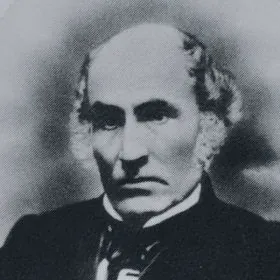
Thomas Arndell
First Fleet Surgeon & Hawkesbury Pioneer
Thomas Arndell was born on 4 March 1753 at Kington, England. At the age of thirty-five he was one of seven assistant surgeons who formed the medical staff led by Surgeon-General John White, charged with the care of the convicts of the First Fleet. He sailed aboard the ship Friendship, responsible for the health of the officers, crew and their cargo of prisoners. His fellow officer, Lieutenant Ralph Clark, commended him for his skill and devotion — and of the twenty-two convicts who died on the long voyage, only one was from the Friendship.
When the new colony was established in New South Wales, Arndell was appointed surgeon at Parramatta. He was superintendent of the hospital and responsible for the medical needs of the whole district. Given a lease on a house in Parramatta, he set up home there with Elizabeth Burleigh, a convict from the Lady Penrhyn, whom he later married in 1807 and with whom he raised a large family.
A farmer, a magistrate, a friend to settlers
From 1791 Arndell began farming at Rydalmere, where he was granted 600 acres; further grants followed at North Parramatta (1794) and Pennant Hills (1799). In 1795 he requested permission to retire from his medical duties so that he could devote himself to his family and his farms. The request was granted, and he was appointed a magistrate.
He always championed the settlers’ grievances and opposed the rum trade. As magistrate of the Hawkesbury district he dealt with disputes between settlers and the Aboriginal people, and endeavoured to establish good relations with the neighbouring tribes. In 1799 he selected a choice piece of land at Cattai and built his home there. Today Cattai National Park preserves land originally granted to him; the 1820s Cattai Homestead — Arndell’s colonial dwelling — together with convict-built walls and historic farm buildings, still stands within the park.
The birthplace of Ebenezer
Arndell was a committed Christian, and he gave his Christianity hands and feet. He contributed towards the foundation of a church at Portland Head, and the first regular church services in the district were held in his own home. He paid five pounds per annum towards the cost and maintenance of the Ebenezer school and church.
The origins of that church reach back to 1802, when the Coromandel settlers — a group of devout nonconformists seeking religious freedom and better opportunity in the new colony — arrived in New South Wales and were given grants on the Hawkesbury. Thomas Arndell welcomed them warmly and invited them to hold prayer meetings under his roof. It was there, on 26 September 1806, that they formed themselves into the “Portland Head Society for the Propagation of Christian Knowledge and the Instruction of Youth,” resolving to build a chapel and a school. The building was opened in 1809 and named Ebenezer — “hitherto hath the LORD helped us” (1 Samuel 7:12). It was the first church built by voluntary effort in the colony, and remains the oldest surviving church building in Australia that still holds services.
A legacy of eternal significance
Arndell continued as an active member of Ebenezer Church, and as a magistrate, farmer and surgeon, until his death on 2 May 1821. His descendants carried on in the Hawkesbury district and at the Ebenezer Church. His third daughter, Sarah, married the Reverend Lancelot Threlkeld, who established a mission to the Aboriginal people of the Lake Macquarie area and later ministered at the South Head Congregational Church.
Thomas Arndell helped set up a Christian heritage that perpetuates to this day in the Hawkesbury region. His life leaves us several lessons:
- He fulfilled to the best of his ability all that he was given to do — as surgeon, magistrate, farmer and family man.
- He was willing to make the hard decision, at financial cost, to step back from his medical practice so that his family came first. He was ruled not by greed but by what mattered most.
- He allowed God to use him in the founding of a Christian school and church, and supported those ministries personally and financially to the end of his days. Like Moses of old, he cast his rod on the ground and let God do the miraculous with it.
- He passed on his faith to his family, who continued in the life and ministry of Ebenezer Church.
He left behind a legacy. What legacy will we leave behind when the Lord takes us home?
Timeline of Life
- 1753Born at Kington, England, 4 March
- 1787Sails with the First Fleet as assistant surgeon aboard the Friendship
- 1788Appointed surgeon at Parramatta, superintending the hospital
- 1795Retires from medical duty to farm and family; appointed a magistrate
- 1806Portland Head settlers form their Christian society in his home, 26 September
- 1809Ebenezer Church opened
- 1821Dies at Cattai, 2 May
More Profiles
View All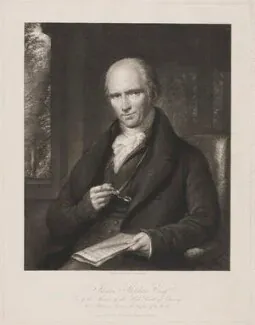
Sir James Stephen
1789–1859
As Permanent Under-Secretary of the Colonial Office, James Stephen — a son of the Clapham Sect — believed God had a special purpose in the Christian settlement of Australia, and bent the machinery of empire towards that end.
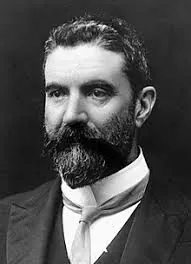
Alfred Deakin
1856–1919
A Father of Federation and Australia's second Prime Minister, Alfred Deakin was a devout Christian whose spiritual life profoundly shaped his public service and his vision for a unified Australia.
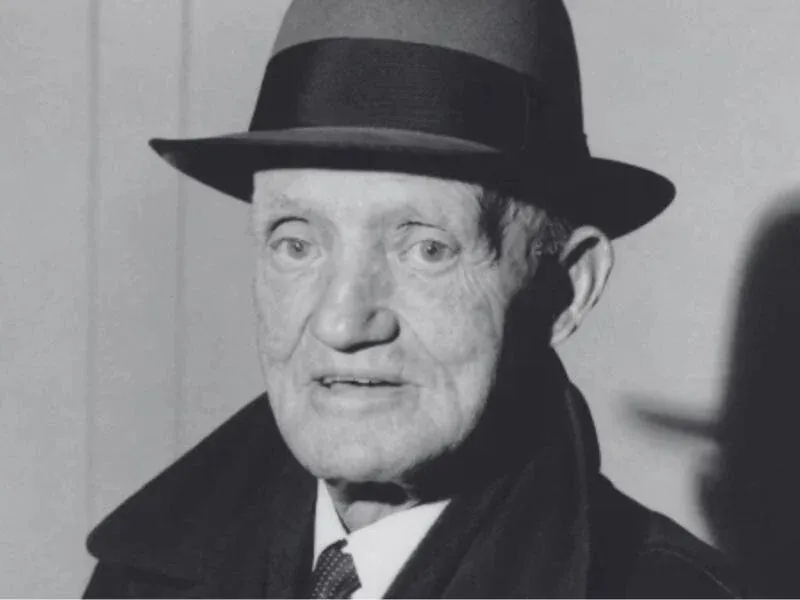
Arthur Malcolm Stace
1885–1967
Once a destitute alcoholic and petty criminal, Arthur Stace was transformed by the gospel and spent 35 years writing one word — 'Eternity' — across the pavements of Sydney, an estimated half a million times.